

How to Remove Sticker Residue from Any Surface
Sticker residue removal is a chemistry-driven process where heat, solvents, or mechanical force breaks the polymer bond holding adhesive to a surface. Peel a sticker and the paper lifts, but the glue matrix stays behind. The right method depends on two things: the surface material and the type of adhesive. Get that match wrong and you risk fogging plastic, lifting paint, or spreading the residue further. This guide covers the tools, surface-specific techniques, and troubleshooting steps you need to clean any sticky mess cleanly and safely.
What tools and materials do you need to remove sticker residue?
The right supplies make the difference between a five-minute fix and a scratched surface. Stock these before you start.
Solvents and liquids are the workhorses of adhesive removal. Isopropyl alcohol (70% or 90%) works on glass, metal, and electronics. White vinegar dissolves light residue on glass and sealed surfaces. Mineral oil and vegetable oil lift adhesive from finished wood and skin without stripping coatings. Acetone removes stubborn glue from glass and metal but damages most plastics through fogging or crazing. Commercial removers fill the gap between household staples and professional-grade products.
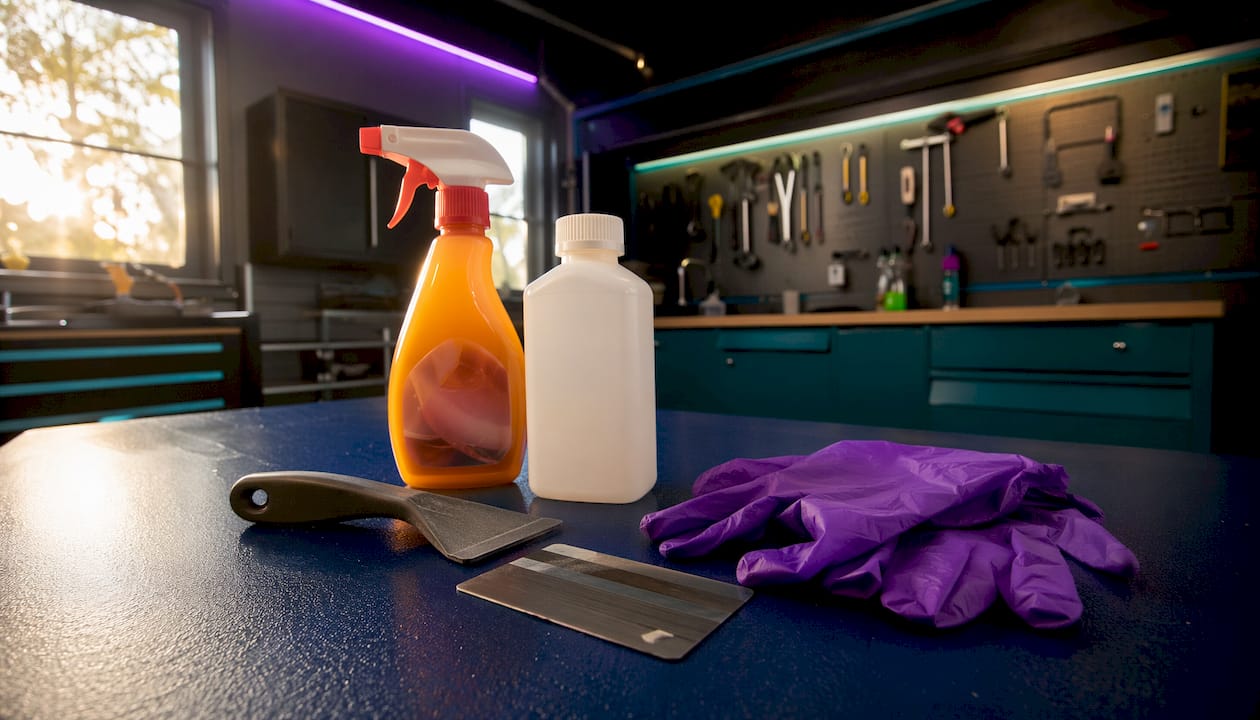
On the commercial side, citrus-based removers like Goo Gone cost around $10 and work gently on most surfaces. Professional-grade options like 3M General Purpose Adhesive Cleaner run about $36 and cut through cured or aged adhesive that milder products cannot touch. Start with Goo Gone and escalate to 3M only when needed.
Mechanical tools include plastic scrapers, old credit cards, microfiber cloths, and rubber erasers. Use a razor blade only on glass, held at a shallow angle. Avoid metal scrapers on painted or plastic surfaces.
Safety items are non-negotiable. Wear nitrile gloves when using acetone or commercial solvents. Keep a clean cloth ready to blot, not rub. Always test any solvent on a hidden spot first.
| Remover | Cost | Best surfaces | Aggressiveness |
|---|---|---|---|
| Isopropyl alcohol | Low | Glass, metal, electronics | Moderate |
| White vinegar | Very low | Glass, sealed surfaces | Mild |
| Mineral or vegetable oil | Very low | Finished wood, skin | Mild |
| Goo Gone (citrus-based) | ~$10 | Most surfaces | Mild to moderate |
| Acetone | Low | Glass, metal only | High |
| 3M Adhesive Cleaner | ~$36 | Stubborn residue, most surfaces | High |
Pro Tip: Always apply solvent to a microfiber cloth first, then press the cloth to the surface. Pouring solvent directly risks runoff that stains grout, warps wood grain, or seeps into electronics.
How do you remove sticker residue safely from common surfaces?
Surface compatibility is the single most important factor in choosing a removal method. Glass and metal tolerate strong solvents and even razor scraping. Finished wood, painted surfaces, and plastics need gentler chemistry.
Glass and metal
Isopropyl alcohol or acetone both work on glass and bare metal. Soak a cloth, press it against the residue for 2–5 minutes, then wipe in one direction. For thick deposits on glass, a razor blade held at a 30-degree angle lifts residue without scratching. Rinse with water and dry.
Plastic surfaces
Acetone is off the table for most plastics. It dissolves surface coatings, leaving permanent fogging. Use isopropyl alcohol or Goo Gone instead. Apply to a cloth, let it sit for 2–5 minutes, and rub gently with a microfiber cloth. If you need to remove stickers from a laptop lid, isopropyl alcohol on a microfiber cloth is the safest choice.
Finished and raw wood
Oil is your best friend on finished wood. Mineral oil or olive oil softens the adhesive without attacking the finish. Apply, wait 5 minutes, then rub with a soft cloth. For raw or unfinished wood, avoid water-based solvents entirely. They raise the grain and cause swelling. Stick to oil-based methods.
Painted surfaces
Test any solvent in a hidden corner first. Isopropyl alcohol at 70% is usually safe on cured automotive or wall paint. Acetone and strong commercial solvents will strip paint. Use a plastic scraper after softening with alcohol, and work slowly.
Fabric and clothing
Freezing the garment for one hour makes the adhesive brittle. Once frozen, flex the fabric and scrape the residue off with a plastic card. Follow up with a small amount of rubbing alcohol or dish soap worked in with your fingers, then wash normally.
Skin
Cooking oil or baby oil dissolves adhesive on skin safely. Rub the oil over the residue, wait 30 seconds, and wipe away. Soap and warm water finish the job.
| Surface | Recommended method | Avoid |
|---|---|---|
| Glass | Isopropyl alcohol, acetone, razor blade | Nothing, all solvents safe |
| Metal | Isopropyl alcohol, acetone, Goo Gone | Abrasive pads that scratch |
| Plastic | Isopropyl alcohol, Goo Gone | Acetone |
| Finished wood | Mineral or vegetable oil | Water-based solvents, acetone |
| Painted surfaces | 70% isopropyl alcohol | Acetone, strong commercial solvents |
| Fabric | Freeze, then scrape; rubbing alcohol | Heat before scraping |
| Skin | Cooking oil, baby oil | Acetone, strong solvents |
Pro Tip: A hairdryer set to medium heat for 30 seconds softens adhesive on almost any hard surface before you apply any solvent. Heat combined with oil is one of the fastest overall removal methods, and it reduces the amount of chemical you need.
Step-by-step instructions to remove sticker residue effectively
Adhesive removal works in tiers: start with the gentlest method, then escalate only if the residue holds. This approach protects surfaces and avoids unnecessary chemical exposure.
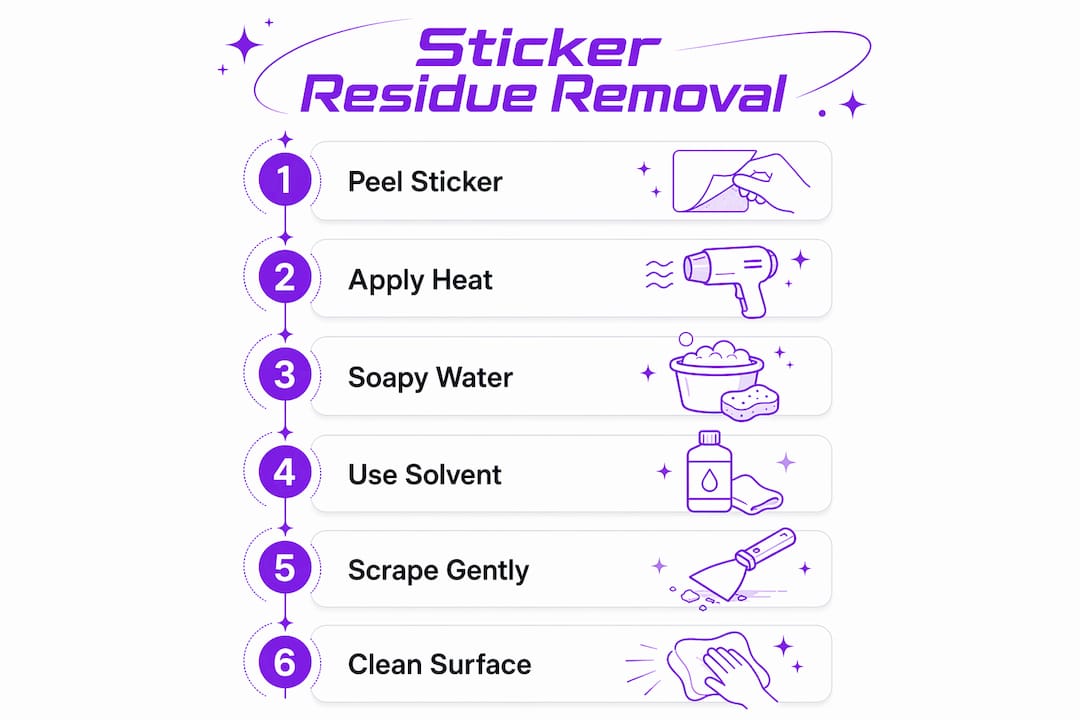
Step 1: Peel off as much of the sticker as possible. Pull slowly at a low angle. Rushing tears the sticker and leaves more adhesive behind.
Step 2: Apply heat. Use a hairdryer on medium for 30 seconds over the residue. Heat softens the polymer matrix and makes the next step easier.
Step 3: Try soapy water first. Mix a few drops of dish soap with warm water. Dampen a cloth and press it against the residue for 2 minutes. This works on fresh, light residue and is safe on almost every surface.
Step 4: Apply your chosen solvent to a cloth. Never pour solvent directly onto the surface. Press the damp cloth against the residue and hold it there. A dwell time of 2–5 minutes is required for the solvent to penetrate the adhesive polymer matrix and loosen the bond.
Step 5: Wipe in one direction. Use a clean section of microfiber cloth and wipe from the edge of the residue inward. Circular scrubbing spreads the dissolved adhesive and creates a larger mess.
Step 6: Use a plastic scraper if residue remains. Hold the scraper at a low angle and push, do not drag. On glass only, a razor blade is acceptable.
Step 7: Escalate if needed. If mild solvents fail, move to Goo Gone. If Goo Gone fails, move to 3M Adhesive Cleaner. Apply, wait, wipe. Repeat the dwell time step each time.
Step 8: Clean the surface. After residue is gone, wipe the area with a damp cloth to remove solvent residue. Dry thoroughly. On wood, apply a light coat of the appropriate finish or conditioner.
Pro Tip: For stubborn spots, layer methods. Apply heat first, then oil, then a mild solvent. Each layer softens the adhesive further without jumping straight to aggressive chemicals.
Common challenges when removing sticker residue
Some adhesive residue simply refuses to budge with standard methods. Understanding why helps you choose the right fix.
Aged adhesive is the hardest to remove. Old residue stiffens through oxidation and cross-linking, a chemical process where polymer chains bond to each other over time. The result is a hard, insoluble patch that mild solvents cannot penetrate. You need heat plus a strong solvent, or mechanical abrasion after softening.
- Cured adhesive on glass or metal: Apply 3M Adhesive Cleaner, wait 5 minutes, then scrape with a razor blade (glass) or plastic scraper (metal).
- Cured adhesive on plastic: Soak a cloth in Goo Gone, tape it against the residue for 10 minutes, then rub firmly with a microfiber cloth.
- Residue on electronics: Apply isopropyl alcohol to a cotton swab, not a cloth. Work in small sections. Applying solvents to a cloth prevents runoff into ports and circuits.
- Residue that smears: You are using too much solvent or rubbing too hard. Blot, do not scrub. Let the chemistry do the work.
- Paint lifting during removal: Stop immediately. Switch to a milder solvent and test again in a hidden spot.
Scrubbing harder is the most common mistake in adhesive removal. Chemical interaction matters more than force. Softening the adhesive polymer matrix is what releases the bond. Patience and dwell time outperform any amount of physical pressure.
Avoid using steel wool, abrasive sponges, or sandpaper on any surface except bare metal or concrete. These tools scratch finishes permanently and create micro-grooves that trap future residue.
Key Takeaways
The most effective way to remove sticker residue is to match your solvent and method to the surface material, apply it with dwell time, and escalate from mild to strong only as needed.
| Point | Details |
|---|---|
| Chemistry beats force | Softening the adhesive polymer matrix releases residue; scrubbing harder causes surface damage. |
| Match solvent to surface | Use isopropyl alcohol on glass and electronics; oil on wood and skin; avoid acetone on plastics. |
| Dwell time is required | Hold solvent-dampened cloth against residue for 2–5 minutes before wiping or scraping. |
| Escalate in tiers | Start with heat and soapy water, move to Goo Gone, then to 3M Adhesive Cleaner if needed. |
| Aged residue needs more | Old adhesive cross-links and hardens; combine heat with a strong solvent and mechanical scraping. |
What I’ve learned from years of working with stickers
Most people attack residue the wrong way. They grab the nearest bottle of acetone or the roughest scrubber they own and go hard. The surface pays the price, not the glue.
The single habit that changed my results was testing every solvent in a hidden spot before touching the visible area. It takes 30 seconds and has saved me from fogging plastic, stripping paint, and ruining finishes more times than I can count. Skipping that step is the most expensive shortcut in DIY cleaning.
The second thing I learned is that patience is the actual active ingredient. Solvents need time to work. Most people wipe after 30 seconds and conclude the product failed. Give it the full 2–5 minutes and the residue usually lifts with almost no effort.
The third misconception I see constantly is treating all sticker glue the same. A fresh price tag on a glass jar needs 30 seconds of isopropyl alcohol. A two-year-old vinyl decal on a painted car door needs heat, a commercial solvent, and a plastic scraper used carefully. Recognizing which situation you are in before you start saves time, money, and surface damage.
— Vimpi
Stickers worth putting up (and knowing how to take down)
Stickers are only as good as the surface they live on. If you know how to remove adhesive cleanly, you can decorate freely without worrying about the aftermath.

Vimpi’s chrome sticker sheets are designed with quality materials that peel cleanly and leave minimal residue on most surfaces. Whether you are decorating a laptop, a planner, or a skateboard, the metallic designs hold up without the sticky mess that cheaper stickers leave behind. Vimpi also carries metallic decals for laptops and skateboards built for surfaces where clean removal actually matters. Browse the full collection at Vimpi and decorate with confidence.
FAQ
What is the fastest way to remove sticker residue?
Heat combined with oil is one of the fastest overall removal methods. Use a hairdryer for 30 seconds, apply mineral or cooking oil, then wipe with a microfiber cloth.
Is isopropyl alcohol safe for removing sticker residue from laptops?
Yes. Apply isopropyl alcohol to a microfiber cloth, not directly to the laptop, and rub gently. This controls solvent spread and protects ports and screens.
Why is old sticker residue harder to remove?
Aged adhesive hardens through oxidation and cross-linking, making it less soluble. You need heat plus a strong commercial solvent and light mechanical scraping to break it down.
Can you remove sticker residue from fabric?
Yes. Freeze the garment for one hour to make the adhesive brittle, then scrape it off with a plastic card. Follow with rubbing alcohol and a normal wash cycle.
Does acetone remove sticker residue from plastic?
Acetone dissolves the surface coating on most plastics, causing permanent fogging. Use isopropyl alcohol or a citrus-based remover like Goo Gone on plastic surfaces instead.